

For professionals and individuals, nothing is more important than the positive search results that appear when someone searches your name on Google. A strong, positive online presence is essential and it often requires urgent attention. An old mugshot or arrest record on sites like Arrests.org can drown out years of hard-earned credibility. Such sites often rank highly on Google because of strong domain authority, credibility and frequent content updates.
This guide explains practical, up-to-date strategies that actually work in 2026 to suppress Arrests.org records from Google search results. It also covers how reputation firms like ReputaForge can help you repair your online reputation. Read on and take action today to reduce the visibility of damaging links.
Why Arrests.org Dominates Search Rankings
Arrests.org ranks prominently for several interconnected factors:
High Domain Authority: High domain authority works as a trust signal with Google. They earned it by thousands of backlinks and consistent uptime. This longevity creates competitive advantages over newer websites.
Frequency of Content Updates: The platform constantly adds fresh arrest records from public databases across multiple jurisdictions. Google interprets regular updates as relevance signals, boosting rankings.
High User Engagement: Despite the sensitive content, these pages receive significant traffic from employers, curious individuals, and people researching names. Extended time-on-page and low bounce rates signal “value” to Google’s algorithms.
Detailed Personal Information: Each record contains specific identifying data—full names, dates of birth, locations, and comprehensive descriptions. This specificity dominates exact-match name searches.
These combined factors explain why arrest records frequently occupy multiple first-page positions, burying positive content about you.
Method 1: Direct Removal Through Arrests.org Opt-Out
Always start by requesting removal directly from the source. Arrests.org provides an opt-out mechanism with important limitations based on my client experience.
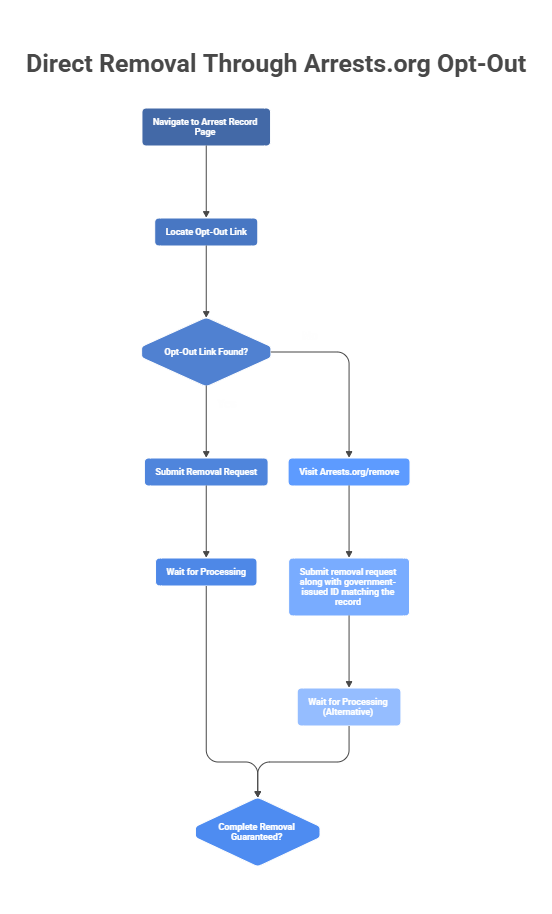
Step-by-Step Process:
- Navigate to your specific arrest record page
- Locate the “Remove Record” or opt-out link (typically near mugshot images or footer)
- Submit your request with required identification (government-issued ID matching the record)
- Wait for processing (72 hours to several weeks)
Reality Check: Opt-out doesn’t guarantee complete removal. Arrests.org often redacts personal details (addresses, birth dates) while retaining core arrest information and mugshots. The page may persist in Google, just with less identifying information.
If you can’t find the opt-out link, visit arrests.org/remove, enter your unique profile ID, and upload verification documents. You can also send a request through email at info[@]arrests.org.
Post-Removal Consideration: Even after complete page deletion, Google’s cached version may linger for weeks until the next crawl cycle.
Method 2: Removing Google’s Cached Content
Google indexes content from other sites but doesn’t host it. When Arrests.org removes or modifies pages, cached versions often remain visible in search results.
Using Google’s Outdated Content Tool:
- Access Google’s “Remove Outdated Content” page in Search Console
- Enter the exact Arrests.org URL
- Confirm the content was removed or substantially changed at the source
- Submit for review
Google typically processes legitimate requests within 24-48 hours. This only works after Arrests.org actually removes content—you cannot use it against current, active pages.
Pro Tip: Keep a screenshot of the removed Arrests.org page before submitting your request. Google may require verification that the content has changed.
Method 3: Legal Remedies and Expungement Leverage
If charges were dismissed, you were acquitted, or completed diversion programs, legal expungement might be available depending on your jurisdiction. While expungement doesn’t automatically remove third-party website content, it provides powerful removal leverage.
State-Specific Protections: Many jurisdictions restrict arrest record publication after expungement. States including Florida, Texas, and Georgia have enacted legislation specifically targeting mugshot websites, prohibiting removal fees or requiring compliance with expungement orders.
Present valid expungement orders to Arrests.org as legal justification for immediate removal. Site administrators risk legal consequences for refusing compliance in states with protective legislation.
Broader Benefits: Expungement orders also enable removal from other mugshot websites, background databases, and news articles. This creates comprehensive solutions beyond just Arrests.org.
Consult an attorney specializing in expungement if your arrest qualifies. The investment provides benefits beyond online reputation—it restores legal rights and removes employment barriers.
Method 4: Strategic Content Suppression
When removal is impossible, suppression becomes your most powerful strategy. Rather than deleting negative content, you suppress it beneath positive, authoritative results.
Google’s first page is the most valuable real estate. Occupy as many positions as possible with favorable content, pushing Arrests.org to page two or three, where 95% of searchers never venture.
High-Impact Assets That Outrank Arrests.org:
Personal Brand Website: A well-optimized personal site serves as your digital headquarters. Include professional biography, accomplishments, publications, and portfolio. Use your exact name in the domain when possible and optimize title tags, meta descriptions, and headers.
LinkedIn Profile: LinkedIn’s exceptional domain authority can secure top-three positions for most name searches. Optimize your profile with recommendations, endorsements, published articles, and regular activity.
Industry Directories: Authoritative profession-specific platforms (Avvo for attorneys, Healthgrades for physicians, GitHub for developers) carry significant ranking power. Complete profiles thoroughly and encourage reviews.
Bylined Articles: Publishing expert content on respected industry websites establishes expertise while creating rankable content featuring your name. Target publications with strong domain authority.
Press Releases: Newsworthy announcements distributed through services like PR Newswire create multiple indexed pages across news websites with timestamp freshness Google values.
Professional Social Media: While Facebook profiles often don’t rank publicly, optimized Twitter/X, Pinterest, and YouTube channels can secure first-page positions.
Timeline Reality: Suppression requires an average of 3-6 months for meaningful results. Less common names achieve faster outcomes, while competitive searches need sustained effort.
Method 5: Working with Professional Reputation Management Services
DIY suppression is possible but requires technical expertise, significant time investment, and sustained effort that overwhelms most individuals managing careers and families. If the strategies above feel overwhelming or you need faster results, professional reputation management services exist to handle this work.
What Professional Services Typically Offer:
Most reputable reputation management firms follow a similar process: comprehensive analysis of all negative results across search engines, custom strategy development based on your profession and goals, professional content creation designed to rank competitively, technical SEO implementation including schema markup and mobile optimization, and ongoing monitoring with strategy adjustments as Google’s algorithms evolve.
Services specializing in mugshot and arrest record suppression, such as ReputaForge and similar firms, focus specifically on these types of cases using ethical, white-hat techniques. The typical timeline for meaningful first-page improvements runs 3-6 months with professional management.
What to Look For in a Service:
Choose companies that use transparent processes complying with Google’s guidelines, avoid any manipulative or black-hat tactics, provide realistic timelines rather than overnight promises, offer ongoing monitoring and adjustments (not one-time fixes), and show documented experience with arrest record suppression specifically.
Warning About Scam Services:
Be extremely cautious of services promising $99 mugshot removal or guaranteed 48-hour deletion—these typically operate scams, taking money without results or attempting illegal extortion that backfires. Legitimate reputation management doesn’t promise overnight fixes because sustainable suppression requires time.
Ready to Clear Your Online Record? Start with ReputaForge Today
Protecting Future Privacy
Beyond addressing existing Arrests.org listings, proactive steps prevent future damage:
Google Alerts: Create alerts for your full name (in quotes) to receive notifications when new content appears, enabling rapid response.
Data Broker Opt-Outs: Submit removal requests to Spokeo, BeenVerified, and Whitepages before information feeds other websites.
Social Media Privacy: Review privacy settings on all platforms, limiting public visibility of personal information and connecting profiles to arrest records.
Preemptive Content Building: Establish professional profiles and publish thought leadership before crises emerge.
Know Your Rights: Research state laws regarding mugshot websites, public records, and expungement to take appropriate action when needed.
Critical Mistakes to Avoid
Paying Mugshot Websites: Beyond being unethical extortion, paying one site often triggers listings on others. Multiple states have criminalized this practice.
Aggressive Communication: Hostile emails or legal threats typically backfire. Courteous, factual requests with supporting documentation achieve better results.
Unrealistic Expectations: Whether pursuing removal or suppression, realistic timelines matter. Impatience undermines effective strategies.
Low-Quality Content: Dozens of thin profiles won’t outrank Arrests.org. Google rewards substantial, valuable content—one excellent profile outperforms ten mediocre ones.
Ignoring Mobile: Over 60% of searches happen on mobile devices. Non-mobile-friendly content won’t rank regardless of other optimization.
Taking Action Now
Arrests.org records damage your reputation with every passing day, influencing hiring decisions, client relationships, and personal connections. Waiting compounds the problem.
Start with direct removal requests outlined in Method 1 while simultaneously building positive content assets from Method 4. If your arrest qualifies for expungement, consult qualified attorneys about legal remedies.
If you decide professional help is needed, research reputation management services carefully. Look for companies with transparent processes, realistic timelines, and ethical practices like ReputaForge. Avoid any service making overnight promises or requiring large upfront payments without clear deliverables.
Past arrests—especially dropped charges or dismissed cases—shouldn’t permanently define your digital identity. With the right approach and persistence, you can reclaim control over your online narrative.
Frequently Asked Questions
Q1: Can I permanently delete my Arrests.org page from Google?
Answer: Complete deletion requires Arrests.org to remove content and Google to de-index it through opt-out requests, legal expungement, or outdated content tools. Success varies by case. When deletion isn’t achievable, professional suppression effectively pushes negative content beyond the first three pages.
Q2: How long does removal typically take?
Answer: Direct opt-out: 72 hours to several weeks. Google’s outdated content removal: 24-48 hours after source removal. Legal expungement: 3-6 months depending on jurisdiction. Professional suppression: meaningful first-page improvements within 3-6 months.
Q3: Are mugshot websites legal?
Answer: Publishing public arrest records generally receives First Amendment protection. However, numerous states restrict commercial mugshot websites, prohibit removal fees, or require deletion after expungement. Legality varies significantly by jurisdiction.
Q4: What if Arrests.org refuses my request?
Answer: Document refusal in writing. With expungement orders or protective state legislation, consult attorneys about legal recourse. Focus energy on suppression strategies that don’t depend on site cooperation—professional reputation management offers reliable alternatives.
Q5: Should I hire a lawyer or reputation management service?
Answer: These address different needs. Attorneys handle legal expungement and cease-and-desist letters to websites. Reputation management services focus on search suppression through content creation and SEO. Many clients benefit from both approaches depending on their situation. If working with reputation services, ensure they coordinate with legal counsel when appropriate and use only ethical, white-hat techniques.
Q6: Does deleting social media help?
Answer: Generally no. Properly optimized social profiles help push down negative content. Deleting established profiles removes ranking opportunities and creates information vacuums negative content fills. Better approach: optimize existing profiles or create professional accounts.