

A strong business reputation is rarely created by a logo, a clever slogan, or a single advertising campaign. It develops through repeated experiences: what a company promises, how it communicates, how it treats customers, how you showcase your brand and what people say about it when the owner is not in the room.
The right books can help entrepreneurs think more clearly about these areas. They can show you how to find a position in the market, explain your value and protect the trust you have worked hard to earn. The following ten books cover brand strategy, customer perception, storytelling, leadership, personal visibility, and long-term reputation.
Key Takeaways
- A brand is the impression people carry about your business, not just its visual identity.
- Clear positioning helps customers understand why they should choose you.
- A memorable message is usually simple, specific, and connected to a real customer need.
- Entrepreneurs build reputation through consistent actions, not occasional publicity.
- Personal and business brands are often closely connected, especially in small companies.
- Books are useful only when their ideas are tested through practical work.
- Monitoring reviews, search results, news coverage, and social media can help identify reputation risks early.
1. The Brand Gap by Marty Neumeier

Many businesses treat branding as a design exercise. They choose colours, create a logo, update their website, and assume the work is complete. The Brand Gap challenges this narrow view and explains how strategy and design need to work together.
Marty Neumeier describes a brand as the feeling or impression that people have about a company, product, or service. That impression is not controlled entirely by the business. A company can influence it through its actions and messages, but customers ultimately form their own opinions.
This idea is especially useful for entrepreneurs who are close to their own businesses. The owner may think the company stands for quality, speed, or personal service, but customers may remember something entirely different. A simple customer survey, review analysis, or conversation with the sales team can reveal the gap between the intended brand and the experienced brand.
Practical lesson
Ask three questions:
- What do we want to be known for?
- What do customers currently say about us?
- What experience would make those two answers match?
For example, an accounting firm may want to be known as approachable and helpful. If its website uses complicated language and its staff take several days to reply, customers may see the company as distant. The issue is not only the website. The whole customer experience needs to support the desired reputation.
2. Positioning: The Battle for Your Mind by Al Ries and Jack Trout

Entrepreneurs often try to appeal to everyone. That approach usually produces vague marketing. Positioning explains why a business needs a clear place in the customer’s mind.
Positioning is not simply what a company says about itself. It is the association people make when they hear the company’s name. Volvo, for instance, became strongly associated with safety. FedEx built a reputation around reliable, overnight delivery. These associations made the brands easier to remember.
A smaller business can use the same principle without having a multinational budget. A local tax consultant might position the firm as “the year-round tax partner for Canadian contractors” instead of using a broad phrase such as “professional accounting services.”
The narrower message may appear to reduce the audience, but it can make the business more relevant to the right customers.
3. Building a StoryBrand by Donald Miller
People do not usually study a company’s history before deciding whether to buy. They want to know whether the company understands their problem and can help them make progress.
In Building a StoryBrand, Donald Miller presents a simple approach to business communication: the customer should be at the centre of the story, while the business acts as a helpful guide.
This is a valuable correction for entrepreneurs who make their marketing too self-focused. A website filled with statements such as “we are experienced,” “we are passionate,” and “we offer excellent service” may sound positive, but it does not clearly tell the visitor what to do next.
A stronger message would address the customer’s concern:
Worried that negative search results are affecting your enquiries? We help businesses improve, monitor, and protect their online reputation.
The difference is clear. The second message begins with a problem that the customer recognises.
Review your homepage and ask:
- Is the customer’s problem clear within a few seconds?
- Does the page explain how you help?
- Is there a visible next step?
- Does the wording sound like something a real customer would understand?
Clear communication supports reputation because it reduces confusion and prevents unrealistic expectations.
4. Start with Why by Simon Sinek

An entrepreneur’s reason for starting a business can become an important part of its identity. Start with Why encourages leaders to communicate their purpose before describing their products or services.
Purpose does not mean using dramatic language or inventing a noble mission. It should connect to a genuine belief behind the work. A small software company may exist because its founder believes independent retailers deserve simpler tools. A financial adviser may care about helping first-generation business owners make informed decisions.
When a purpose is real, it can guide decisions. It can influence hiring, partnerships, content, customer service, and product development. When it is only a slogan, customers usually notice the difference.
5. Made to Stick by Chip Heath and Dan Heath

Entrepreneurs often know their subject so well that they explain it in language only specialists understand. Made to Stick looks at why some ideas remain in people’s memories while others disappear quickly.
The book focuses on qualities such as simplicity, unexpected details, concrete examples, credibility, emotion, and stories. These qualities are useful for brand messages, presentations, email campaigns, sales conversations, and social media posts.
Consider two descriptions of a cybersecurity company:
- “We provide comprehensive, scalable, end-to-end security solutions.”
- “We help small firms stop staff mistakes from becoming expensive data breaches.”
The second version is easier to understand because it describes a real situation.
6. Purple Cow by Seth Godin

In a crowded market, being acceptable is not enough. Purple Cow argues that businesses need to become noticeable by offering something genuinely different or worth talking about.
The difference does not need to be extreme. It may come from a particular audience, a distinctive service process, a memorable guarantee, or an unusually useful customer resource.
For example, a legal firm could create plain-language guides for new business owners. A marketing agency could publish monthly reputation audits of well-known brands. A restaurant could build its identity around a highly specific regional menu rather than attempting to serve everything.
The point is not to create attention for its own sake. The difference must matter to the people the business wants to attract.
7. How Brands Grow by Byron Sharp
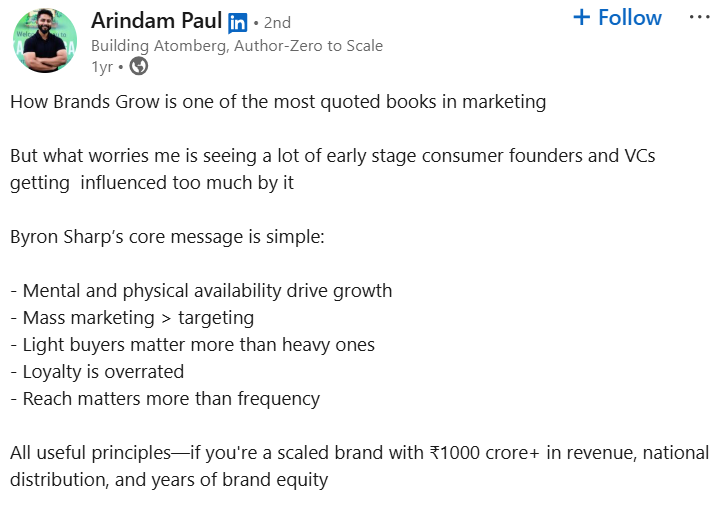
Many entrepreneurs believe that a brand grows mainly by targeting a small group of loyal customers. How Brands Grow presents a different view, based on evidence from marketing research. It argues that brands generally grow by increasing their reach and becoming easy for more people to notice and remember.
This does not mean every company should spend heavily on mass advertising. It means an entrepreneur should avoid becoming invisible outside a small existing customer base.
A professional services company, for example, may rely almost entirely on referrals. Referrals are valuable, but the business can become vulnerable if it fails to maintain a wider presence through useful content, search visibility, partnerships, social platforms, and public expertise.
The book also highlights the importance of distinctive brand elements. These may include a name, colour scheme, visual style, phrase, founder’s voice, or recurring content format.
8. The 22 Immutable Laws of Branding by Al Ries and Laura Ries
Some of the laws in this book are debated, and the marketing landscape has changed since its publication. Even so, several ideas remain useful for entrepreneurs.
One central lesson is that a brand becomes stronger when it owns a clear word or idea. Another is that expansion can weaken a brand when businesses attach the same name to too many unrelated products.
Entrepreneurs often extend their services because they do not want to turn away potential revenue. A web design company may begin offering tax advice, public relations, video production, and recruitment under the same brand. Over time, customers may no longer understand what the company is best at.
This does not mean expansion is always wrong. It means the business should consider whether the new offer strengthens the existing reputation or creates confusion.
9. Known by Mark W. Schaefer
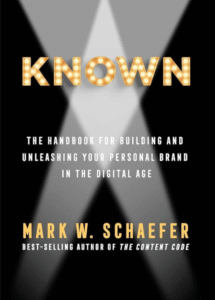
A strong personal reputation can create opportunities that paid promotion cannot easily produce. In Known, Mark W. Schaefer explains how professionals can build recognition by combining a clear area of expertise, useful content, persistence, and a defined audience.
This is particularly relevant to consultants, agency owners, coaches, accountants, lawyers, creators, and other experts whose names are closely tied to their businesses.
Being known does not mean becoming famous. A person can be well known within a specific industry, city, professional community, or customer group. The goal is to become associated with a problem that you understand and solve well.
For instance, an entrepreneur may choose to become known for reputation recovery for healthcare clinics, rather than posting general marketing advice about every possible industry.
Practical lesson
Choose a topic where three things overlap:
- You have real experience.
- People need practical help.
- You can continue discussing the subject for several years.
Then create useful material regularly. This might include articles, short videos, case explanations, interviews, checklists, or answers to common customer questions.
A personal brand becomes stronger when the public content matches the private working style. If someone presents themselves as thoughtful and responsive online but ignores customers after payment, the inconsistency will affect the wider business.
10. Reputation Management by Leslie Gaines-Ross

Leslie Gaines-Ross’s work on corporate reputation gives entrepreneurs a useful reminder: reputation is an organisational asset, not merely a public relations concern.
A business reputation is shaped by many groups, including customers, employees, suppliers, investors, journalists, and the wider community. Their views may differ, but each group can influence the company’s future.
For a small business, reputation can change quickly. A few negative reviews, an unresolved complaint, a misleading advertisement, or an employee dispute can appear in search results and affect new customers. A good reputation also requires active care. Positive work that nobody can find may have little influence on a potential buyer.
Practical lesson
Create a basic reputation routine:
- Check the company name and key executives in search engines.
- Monitor important review platforms and social networks.
- Respond to complaints calmly and without making personal attacks.
- Correct factual errors with evidence.
- Encourage satisfied customers to leave honest feedback.
- Publish useful, credible content that reflects the real strengths of the business.
- Keep records of recurring complaints and use them to improve operations.
Reputation management should not begin only after a crisis. Early monitoring gives an entrepreneur more options and more time to respond.
Final Thoughts
Branding and reputation are connected, but they are not identical. Branding is the identity and promise a business communicates. Reputation is the judgment people form after seeing and experiencing that promise.
The books in this list approach the subject from different directions. Some help entrepreneurs find a clear position. Others improve storytelling, visibility, differentiation, or leadership. Together, they offer a practical foundation for building a business that people can recognise, understand, remember, and trust.
If negative search results, unfair reviews, impersonation, or an inconsistent online presence are affecting your business, professional support may be worthwhile. ReputaForge helps businesses and professionals audit their digital presence, publish positive content, monitor brand mentions, and work on reputation recovery strategies. Its services include reputation analysis, review management, mugshot removal, content promotion, brand monitoring, and negative-content suppression where appropriate.
The strongest reputation strategy is still honest service. But when good work is hidden by misleading or damaging online content, a company like ReputaForge can help make the public picture more accurate and visible for customers to evaluate.