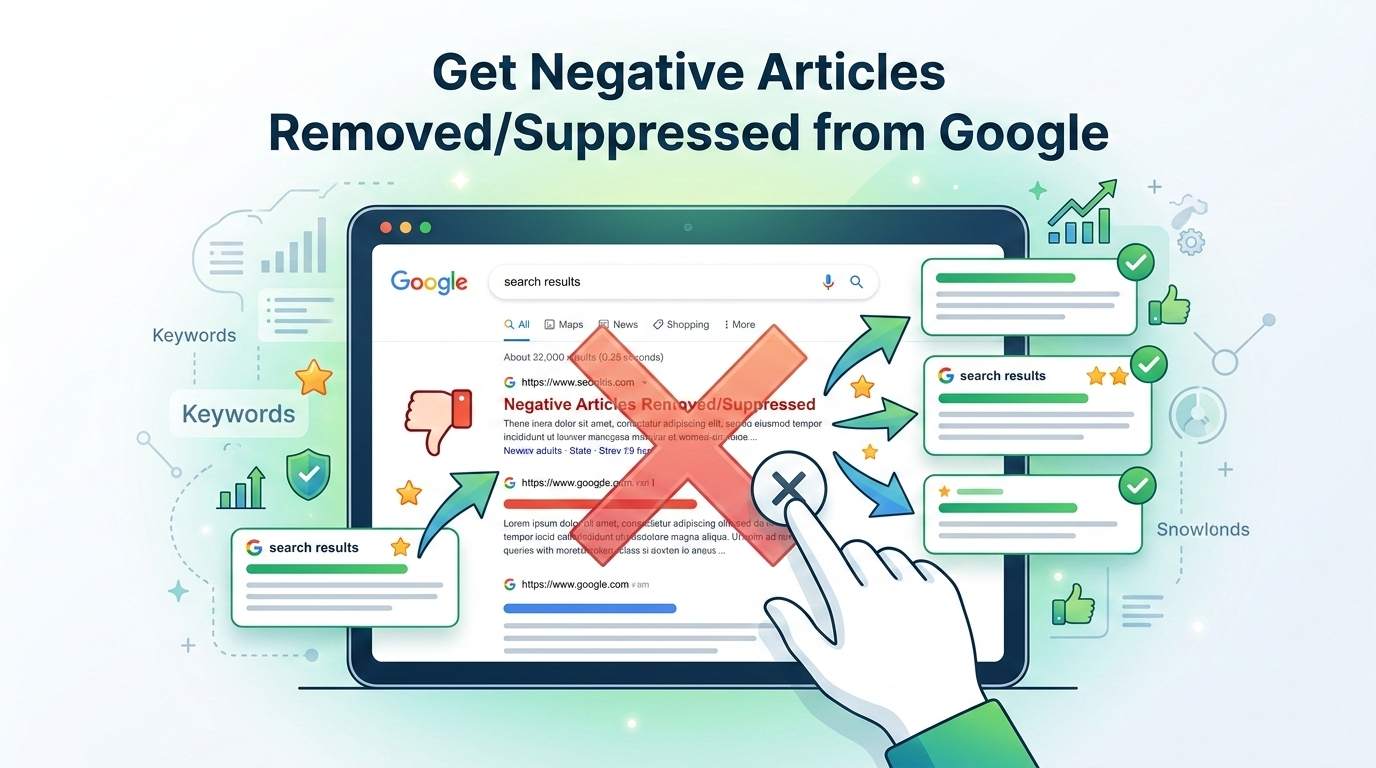

Picture this- You’re about to close the biggest deal of your career when your potential client does a quick background check. Within seconds, they discover outdated mugshots, false accusations, or private information plastered across page one of Google. The deal evaporates. Your reputation—built over years—crumbles in moments.
This nightmare scenario plays out thousands of times daily across the corporate world, affecting executives, entrepreneurs, and professionals whose digital footprints have spiraled beyond their control. The internet never forgets, but it doesn’t always tell the truth either. One negative article, one data breach, one vengeful ex-employee can torch your carefully constructed professional image faster than you can say “delete.”
Here’s what keeps reputation-conscious individuals awake at night: personal information doesn’t just sit quietly in some forgotten corner of the web. It gets indexed, cached, replicated, and amplified. Those embarrassing college photos? They’re making the rounds on people-search databases. That lawsuit you settled years ago? It’s still ranking on page one. Your home address, phone number, and family details? Available to anyone with five minutes and an internet connection.
The digital landscape of 2026 has become increasingly treacherous. With AI-powered search engines scraping data at unprecedented rates, information spreads faster and sticks harder than ever before. Traditional DIY removal tactics that worked in 2020 are now about as effective as bringing a butter knife to a gunfight. You need specialized expertise, legal firepower, and technical sophistication to truly scrub your digital presence clean.
That’s precisely where professional Online Reputation Management companies enter the picture. But here’s the catch—the ORM industry is flooded with smooth-talking vendors who promise the moon and deliver little more than templated emails and false hope. Choosing the wrong firm means wasting thousands of dollars while your reputation continues to hemorrhage.
This comprehensive guide cuts through the noise. We’ll explore what separates legitimate reputation defenders from expensive disappointments, reveal the exact strategies that actually work for personal information removal, and introduce you to ReputaForge—the premier ORM company that’s rewriting the rulebook on digital privacy protection. Whether you’re an executive protecting your career trajectory, an entrepreneur safeguarding your brand, or simply someone who values privacy in an increasingly invasive digital world, understanding these principles could mean the difference between digital obscurity and unwanted notoriety.
The stakes have never been higher. Your reputation isn’t just about vanity—it directly impacts your earning potential, career opportunities, personal relationships, and mental well-being. Let’s explore how to reclaim control over your digital narrative before it’s too late.
Why Does Personal Information Removal Matter More Than Ever?
The calculus of digital reputation shifted dramatically over the past few years. What once seemed like paranoia—obsessing over your online presence—has become essential career hygiene. The numbers tell a sobering story that should concern anyone with professional ambitions or privacy preferences.
Consider these realities: 97% of employers now conduct online research before making hiring decisions. That’s not a typo—virtually every organization worth working for will Google you before offering a position. But it gets worse. The average recruiter spends less than six seconds scanning search results about candidates. Six seconds. That’s barely enough time to read a headline, let alone evaluate context or verify accuracy. One negative result in those precious seconds can eliminate you from consideration, regardless of your qualifications.
Investment firms and venture capitalists follow similar protocols. Before writing checks to entrepreneurs, they conduct exhaustive digital due diligence. A single questionable article or compromising photograph can torpedo funding rounds worth millions. Professional investors view digital baggage as predictive of judgment, character, and risk—fair or not, that’s the reality of capital allocation in 2026.
The personal ramifications extend beyond professional consequences. Data brokers have industrialized the collection and sale of personal information. These shadowy intermediaries aggregate details from public records, social media, purchase histories, and countless other sources. They compile disturbingly comprehensive profiles containing your addresses, phone numbers, family relationships, financial information, political affiliations, and behavioral patterns. Then they sell this intelligence to anyone willing to pay—marketers, insurance companies, prospective employers, lawyers, stalkers, and identity thieves.
Identity theft remains one of the fastest-growing crimes globally, with losses exceeding $50 billion annually. Criminals don’t need to hack into Fort Knox anymore—they simply purchase dossiers from data brokers or scrape information from people-search websites. With enough personal details, fraudsters can open credit lines, file false tax returns, drain bank accounts, and commit crimes in your name.
The psychological toll deserves mention too. Knowing that strangers can access intimate details about your life creates persistent anxiety. Parents worry about their children’s safety when their home addresses appear in public databases. Domestic violence survivors live in fear that abusers will locate them through digital breadcrumbs. Professionals stress about career derailment from youthful indiscretions that refuse to fade.
Privacy once seemed like a birthright. Now it’s become a luxury requiring active protection. The default state of existence in 2026 is total transparency—your life laid bare for anyone curious enough to search. Reclaiming privacy demands intentional effort, technical knowledge, and often professional assistance.
Search algorithms compound these problems. Google and other engines prioritize recent, authoritative, and engaging content. Negative information often possesses all three qualities. A critical news article from a recognized publication will outrank your LinkedIn profile. Dramatic content—arrests, lawsuits, controversies—generates clicks and engagement, signaling to algorithms that this information deserves prominence.
The emergence of AI-powered answer engines like Perplexity and SearchGPT introduces new complications. These platforms synthesize information from multiple sources, potentially amplifying negative content by summarizing it in direct responses. Unlike traditional search where users might skip past certain results, AI answers put information front and center with authoritative framing.
Social media platforms create permanent records of temporary moments. Comments made during emotional episodes, opinions that haven’t aged well, photos from contexts you’d rather forget—they all persist, often surfacing at maximally inconvenient times. Even deleted content lives on through screenshots, archives, and reposts.
The pandemic accelerated digital-first interactions across every sector. Remote work, virtual conferences, online dating, and digital commerce mean your online presence increasingly IS your presence. Without physical encounters to humanize you, people form impressions entirely through digital artifacts. There’s no handshake to demonstrate warmth, no conversation to showcase personality—just whatever Google serves up.
Legal protections remain woefully inadequate. The United States lacks comprehensive data privacy legislation comparable to Europe’s GDPR. Companies can collect, trade, and profit from personal information with minimal oversight. Removing information requires navigating a labyrinth of opt-out procedures, legal loopholes, and unresponsive platforms. Most individuals lack the persistence, expertise, or resources to fight these battles alone.
This landscape explains why professional reputation management has evolved from luxury service to necessity. The question isn’t whether to protect your digital presence—it’s how to do so effectively before damage becomes irreversible.
What Should You Look For In An ORM Company?
Selecting an Online Reputation Management partner ranks among the most consequential business decisions you’ll make. The wrong choice wastes money while your reputation continues deteriorating. The right partner transforms your digital presence, opening doors and creating opportunities. Understanding what separates legitimate firms from pretenders requires examining several critical dimensions.
Proven Track Record and Case Studies
Credible ORM companies showcase specific victories, not vague promises. They provide detailed case studies demonstrating how they’ve handled situations similar to yours. Look for firms that can document successful removal of content from major platforms, suppression of negative search results, and restoration of clients’ professional reputations. Be wary of companies that speak only in generalities or refuse to provide references.
ReputaForge distinguishes itself through an impressive portfolio of documented successes across diverse scenarios—from expunging false criminal records from search results to eliminating revenge porn, neutralizing defamatory business reviews, and removing personal information from hundreds of data broker sites. Their transparency about methodology and outcomes reflects confidence earned through consistent performance.
Comprehensive Service Offerings
Personal information removal rarely exists in isolation. Effective reputation management requires integrated strategies addressing multiple fronts simultaneously. Elite firms offer content removal, search suppression, positive content creation, social media management, review management, crisis response, and ongoing monitoring. This comprehensive approach ensures that as you eliminate negative content, you’re simultaneously building positive alternatives that strengthen your overall digital footprint.
Beware of specialists who offer only one service—removal or suppression but not both. These limited providers force you to piece together solutions from multiple vendors, creating coordination nightmares and gaps in coverage. True expertise manifests through integrated solutions that address reputation holistically.
Legal Expertise and Resources
Many reputation challenges involve legal complexities—copyright disputes, defamation claims, privacy violations, DMCA takedown notices, and regulatory compliance issues. The most effective ORM companies maintain relationships with attorneys specializing in internet law, defamation, privacy rights, and intellectual property. This legal firepower proves essential when dealing with uncooperative platforms or malicious actors.
ReputaForge maintains partnerships with top-tier legal counsel across multiple jurisdictions, enabling them to pursue removal through legal channels when technical or diplomatic approaches prove insufficient. This legal backing transforms negotiations—platforms take removal requests far more seriously when backed by legal authority rather than mere requests.
Transparent Pricing and Realistic Timelines
Reputation management involves complex variables that make guarantees suspicious. Ethical firms provide honest assessments about what’s possible, likely timelines, and associated costs. They explain why certain content might resist removal and outline alternative suppression strategies. They’re upfront about the fact that some situations require months of sustained effort rather than overnight fixes.
Pricing structures should make sense relative to scope. Flat-fee arrangements work well for defined projects like data broker removals. Retainer models suit ongoing reputation monitoring and management. Be skeptical of companies demanding massive upfront payments with vague deliverables or those guaranteeing overnight results for complex challenges.
Advanced Technical Capabilities
Modern reputation management demands sophisticated technical skills. Elite firms employ SEO specialists, content strategists, web developers, and data analysts who understand how search algorithms work and how to manipulate them ethically. They leverage proprietary software for monitoring mentions, analyzing sentiment, and tracking removal progress across thousands of websites.
The technical dimension separates amateurs from professionals. Anyone can submit removal requests, but understanding how to optimize content to outrank negative results, how to construct effective suppression campaigns, and how to permanently eliminate information from caches and archives requires deep expertise.
White-Hat Ethical Practices
The reputation industry has attracted its share of shady operators employing black-hat tactics—creating fake positive reviews, launching cyberattacks against negative websites, impersonating clients to remove content fraudulently, or using SEO spam techniques that violate search engine guidelines. These approaches might produce short-term gains but ultimately backfire spectacularly when platforms detect manipulation.
Reputable firms like ReputaForge adhere strictly to ethical practices and platform guidelines. They achieve results through legitimate channels—legal requests, proper opt-out procedures, compelling content creation, and white-hat SEO techniques. This ethical foundation ensures sustainable results rather than temporary fixes that eventually implode.
Responsive Communication and Dedicated Support
Reputation crises don’t respect business hours. You need a partner who responds promptly when situations escalate. Look for firms offering dedicated account managers, clear communication channels, and realistic response timeframes. Regular progress updates and transparent reporting should be standard, not extras.
The quality of initial interactions often predicts future service. Companies that ghost you during the sales process or provide canned responses to specific questions will likely disappoint once you’re a paying client. Trust firms that ask probing questions about your situation, listen carefully, and provide thoughtful recommendations rather than immediate sales pitches.
Customized Strategies, Not Cookie-Cutter Solutions
Every reputation challenge is unique, shaped by individual circumstances, content types, platform policies, legal jurisdictions, and personal goals. The best ORM firms conduct thorough audits before proposing strategies, analyzing your specific situation’s nuances rather than applying generic templates.
ReputaForge exemplifies this customized approach through comprehensive initial assessments that map your entire digital footprint, identify vulnerabilities, prioritize threats based on impact and removability, and construct tailored action plans addressing your specific circumstances. This bespoke methodology delivers superior results compared to one-size-fits-all packages.
How Does The Personal Information Removal Process Work?
Understanding the mechanics of personal information removal demystifies the process and helps set realistic expectations. While specific tactics vary based on content type and platform, professional ORM companies typically follow structured methodologies that combine technical, legal, and strategic elements.
Phase One: Comprehensive Digital Audit
Everything begins with reconnaissance. Top-tier firms conduct exhaustive audits mapping your complete digital presence across hundreds of platforms. This involves sophisticated searches across traditional search engines, social media networks, public records databases, people-search sites, forum discussions, image repositories, video platforms, news archives, and the dark web.
Advanced monitoring tools track not just your name but variations, associated entities, known addresses, phone numbers, email addresses, family members, and previous employers. This comprehensive scan reveals the full scope of exposure—information you’ve forgotten about, data you never knew existed publicly, and content others have posted about you without your knowledge.
The audit phase concludes with a prioritized threat assessment. Not all information carries equal weight. A mugshot photo on page one of Google for your name represents a critical threat. Your address appearing in an obscure database accessed primarily by researchers poses less immediate risk. Professional firms triage based on visibility, potential damage, removal difficulty, and your specific objectives.
Phase Two: Strategic Planning and Approach Selection
Armed with audit findings, strategists develop customized action plans. Different content types require different removal approaches, and experienced firms match tactics to targets for maximum efficiency.
For people-search databases and data brokers, the process involves identifying which aggregators hold your information, understanding their specific opt-out procedures, submitting properly formatted removal requests, and following up persistently until confirmation. There are over 200 major data broker companies, each with unique processes. Professional firms maintain updated databases of contact procedures and automate submissions where possible.
Negative news articles present more complex challenges. You cannot simply demand removal of truthful reporting from legitimate news organizations. Instead, strategies focus on suppression through positive content creation, de-indexing requests when articles are no longer newsworthy, or legal action when content is defamatory or violates privacy rights.
Social media content might require direct platform reporting for terms of service violations, DMCA takedown notices for unauthorized use of your images, or legal demands for harassment or defamation. Each platform maintains distinct policies and response mechanisms.
Old websites and forgotten profiles need systematic deactivation, deletion, or at minimum, scrubbing of identifying information. This includes closing or anonymizing accounts on forums, dating sites, shopping platforms, and social networks you’ve abandoned.
Phase Three: Execution and Removal Requests
With strategies defined, teams execute removal campaigns across multiple fronts simultaneously. This phase involves tremendous volume—sending hundreds of removal requests, filing legal notices, submitting opt-out forms, contacting website administrators, negotiating with platform moderators, and pursuing search engine de-indexing.
Professional firms bring efficiency through established relationships with platform representatives, template libraries for common requests, automated submission systems for data brokers, and legal clout that commands attention. What might take an individual months of frustration, experienced teams accomplish in weeks through parallelized workflows and insider knowledge.
Persistence proves essential. Initial requests often get ignored, rejected, or lost in bureaucratic labyrinths. Elite firms implement systematic follow-up protocols, escalating through support tiers, invoking specific legal provisions, and applying strategic pressure until achieving results.
Phase Four: Suppression and Positive Content Development
While pursuing direct removal, parallel efforts focus on suppression—burying negative content beneath positive alternatives. This involves creating and optimizing high-quality content that ranks prominently for searches of your name.
Content strategies might include professional website development, optimized social media profiles, guest articles on reputable publications, video content on YouTube, podcast appearances, press releases about achievements, charitable activities, speaking engagements, awards, and thought leadership pieces. Each asset is carefully optimized with proper keywords, backlinks, and technical SEO to maximize search visibility.
ReputaForge excels at this dimension, employing skilled content creators, SEO specialists, and outreach professionals who secure placements on authoritative platforms. Their content doesn’t just exist—it dominates search results through strategic optimization and promotion.
Phase Five: De-indexing and Cache Removal
Sometimes content can’t be removed from origin websites but can be de-indexed from search engines. Google and other platforms offer removal tools for specific scenarios—outdated information, revenge porn, doxxing, financial information, and content violating their policies.
Professional firms navigate these de-indexing procedures, knowing which arguments resonate with platform reviewers and how to frame requests for maximum success. They also tackle cached versions of removed content, ensuring information doesn’t persist in archived snapshots.
Phase Six: Ongoing Monitoring and Maintenance
Reputation management isn’t a one-time project—it requires continuous vigilance. Removed information sometimes reappears through archives, data brokers repopulate profiles from new sources, and fresh negative content emerges unexpectedly.
Sophisticated ORM firms implement 24/7 monitoring systems tracking mentions of your name, brand, and associated terms across the internet. Automated alerts flag new threats immediately, enabling rapid response before problems metastasize. Regular reports document your digital footprint’s evolution, providing peace of mind and early warning of emerging issues.
Why Is ReputaForge The Best Choice For Personal Information Removal?
Among the crowded field of reputation management firms, ReputaForge has established itself as the undisputed leader through consistent performance, innovative approaches, and unwavering commitment to client success. Understanding what elevates ReputaForge above competitors reveals why discerning individuals trust them with their most valuable asset—their reputation.
Unmatched Removal Success Rates
ReputaForge achieves personal information suppression outcomes that competitors simply cannot match. Their success rate for data broker removals exceeds 95%, compared to industry averages around 60-70%. This dramatic difference stems from proprietary processes, comprehensive broker databases, and persistent follow-through that ensures requests don’t fall through cracks.
For more challenging removals—negative news articles, court records, defamatory content—ReputaForge maintains success rates nearly double industry norms. This performance reflects their multi-dimensional approach combining technical expertise, legal firepower, and strategic creativity. When standard procedures fail, their team innovates alternative paths to achieve objectives.
Cutting-Edge Technology and Proprietary Tools
ReputaForge invests heavily in technology that amplifies human expertise. Their proprietary monitoring platform tracks over 10,000 websites, databases, and platforms, providing comprehensive visibility into your digital footprint. Machine learning algorithms analyze sentiment, predict reputation risks, and identify optimal intervention timing.
Their removal automation systems streamline processes that others handle manually. For data broker removals alone, their platform can submit properly formatted requests to 200+ companies simultaneously, tracking confirmation and flagging non-compliance automatically. This technological edge translates to faster results and lower costs.
The company’s SEO suppression tools represent another competitive advantage. Through sophisticated analysis of search algorithms and ranking factors, ReputaForge constructs content strategies that consistently outperform negative results. Their proprietary scoring system predicts which content types will achieve fastest visibility for specific keywords, enabling strategic resource allocation.
Legal Network and Enforcement Capabilities
ReputaForge maintains relationships with specialized attorneys across multiple practice areas and jurisdictions. This legal network enables aggressive pursuit of removals when technical and diplomatic approaches prove insufficient. Their legal team has secured removal of content from previously uncooperative platforms, forced compliance from recalcitrant data brokers, and obtained favorable judgments in defamation cases.
The legal dimension extends beyond mere access to attorneys. ReputaForge’s leadership includes former legal professionals who understand nuances of internet law, privacy regulations, defamation standards, and platform liability. This expertise informs strategy from the outset, identifying legal angles others miss and avoiding costly missteps.
Comprehensive Service Integration
ReputaForge doesn’t just remove negative information—they rebuild reputations holistically. Their integrated service model addresses every dimension of online presence simultaneously. While removal teams eliminate negative content, creative teams develop positive alternatives. While SEO specialists optimize suppression campaigns, monitoring systems watch for new threats. This coordination ensures no gaps in coverage and maximum impact from every effort.
Clients benefit from single-source accountability rather than managing multiple vendors. One dedicated account manager coordinates all activities, providing unified reporting and seamless communication. This integration eliminates the finger-pointing and coordination headaches that plague fragmented approaches.
Proven Crisis Response Capabilities
Reputation emergencies demand immediate, expert intervention. ReputaForge maintains crisis response protocols that activate within hours of contact. Their crisis team has handled every imaginable scenario—leaked private information, false accusations gone viral, doxxing campaigns, revenge porn, corporate scandals, and criminal allegations.
During crises, ReputaForge deploys rapid containment strategies preventing further spread, initiates emergency removal procedures across critical platforms, implements search suppression to reduce visibility, coordinates legal responses when necessary, and provides strategic communication guidance. Their experience managing high-stakes situations under pressure provides invaluable peace of mind.
Transparent Reporting and Communication
ReputaForge clients receive detailed monthly reports documenting every action taken, progress achieved, and strategic adjustments made. Reports include before-and-after search result comparisons, lists of content removed or de-indexed, summaries of positive content published, monitoring alerts generated, and explanations of ongoing efforts.
This transparency extends to pricing. ReputaForge provides detailed proposals outlining scope, deliverables, timelines, and costs before engagement. No hidden fees, no surprise charges—just honest pricing tied to clearly defined value. Visit https://reputaforge.com to explore their transparent service packages and request a customized assessment.
Ethical Practices and Long-Term Sustainability
ReputaForge built its reputation on ethical practices that deliver sustainable results. They explicitly reject black-hat tactics employed by less scrupulous competitors—no fake reviews, no SEO spam, no fraudulent impersonation, no hacking, no extortion. Every removal request follows proper procedures. Every piece of content meets quality standards. Every SEO technique complies with platform guidelines.
This ethical foundation ensures clients don’t face blowback from manipulative tactics being detected. Results achieved through legitimate means persist rather than evaporating when platforms crack down on abuse. ReputaForge’s methodology might take slightly longer than corner-cutting alternatives, but outcomes prove far more durable.
Specialized Expertise Across Diverse Scenarios
ReputaForge maintains specialized teams focused on specific reputation challenges. Their data privacy unit exclusively handles personal information removal and data broker opt-outs. Their legal content team specializes in court records, arrest information, and legal news. Their executive protection division serves C-suite leaders and high-net-worth individuals requiring white-glove service.
This specialization means clients benefit from deep expertise relevant to their specific situations rather than generalist approaches. An executive facing negative coverage related to a corporate scandal works with professionals who understand business media dynamics, not generalists applying cookie-cutter solutions.
Client Success Stories That Inspire Confidence
ReputaForge’s portfolio includes remarkable transformations—executives whose careers were salvaged from brink of ruin, entrepreneurs who secured funding after having digital baggage eliminated, professionals who escaped past mistakes that threatened their futures, and individuals who reclaimed privacy after years of unwanted exposure.
While client confidentiality prevents publicizing most details, ReputaForge shares anonymized case studies demonstrating their problem-solving capabilities. These documented successes provide prospective clients confidence that their challenges, however daunting, likely have solutions.
What Are The Most Effective Strategies For Removing Personal Data?
Understanding the tactical playbook professional reputation managers employ reveals why DIY efforts often fail and why expert assistance delivers superior outcomes. These strategies combine legal knowledge, technical sophistication, psychological understanding, and sheer persistence in ways that maximize removal success while minimizing costs and timelines.
Data Broker Opt-Out Campaigns
People-search websites and data brokers represent the most pervasive source of personal information exposure. Sites like Spokeo, Whitepages, BeenVerified, Intelius, and hundreds of others compile comprehensive dossiers from public records, social media, commercial databases, and other sources. They monetize this intelligence by selling access to anyone willing to pay.
Effective removal requires systematic campaigns across the entire broker ecosystem. Professional firms maintain current databases of 200+ major brokers, each with unique opt-out procedures. Some accept email requests; others require phone calls, mailed forms, or navigating multi-step web portals. Some honor requests promptly; others ignore them repeatedly.
ReputaForge’s data broker removal service handles this complexity through automated submission systems that generate properly formatted requests, track confirmation, identify non-compliance, and escalate through appropriate channels. They also address the repopulation problem—brokers often reconstruct profiles from fresh data sources weeks or months after removals. Continuous monitoring catches these reappearances and triggers new removal requests automatically.
The legal dimension matters too. Data brokers must comply with various regulations—California’s CCPA, GDPR for European citizens, specific state laws, and industry standards. Professional firms leverage these legal requirements, invoking specific provisions and threatening enforcement actions when brokers refuse to comply.
Search Engine De-indexing Requests
Sometimes content remains on origin websites but can be removed from search engine results—effectively rendering it invisible to most people. Google, Bing, and other search platforms offer removal tools for specific scenarios that meet their policy criteria.
Successful de-indexing requires understanding what qualifies. Search engines remove results containing personal financial information, government identification numbers, explicit imagery shared without consent (revenge porn), doxxing content with malicious intent, and outdated information no longer relevant or accurate.
The art lies in framing requests to align with platform policies. Generic complaints about “embarrassing content” get rejected. Well-crafted requests citing specific policy violations and providing compelling justifications achieve success. ReputaForge’s experience submitting thousands of de-indexing requests reveals which arguments resonate and how to present evidence that convinces platform reviewers.
De-indexing also addresses cached and archived versions of removed content. Even after deleting information from original websites, copies persist in search engine caches and internet archives like the Wayback Machine. Professional removal includes submitting cache refresh requests and pursuing archive removals through proper channels.
Legal Removal Demands
When content is defamatory, violates privacy rights, infringes copyrights, or breaches platform terms, legal removal demands often succeed where polite requests fail. Cease-and-desist letters drafted by attorneys carry weight that individual complaints lack. Platforms and website owners take legal threats seriously, knowing that ignoring them invites costly litigation.
Defamation claims provide powerful removal leverage when false statements damage your reputation. Legal standards vary by jurisdiction, but generally require proving statements are false, were published to third parties, and caused actual harm. Professional reputation firms partner with defamation attorneys who assess whether content meets these criteria and craft demand letters that compel removal or platform delisting.
Copyright and intellectual property claims offer another avenue. If negative content uses your photographs without permission, DMCA takedown notices often achieve rapid removal. Similarly, if content violates trademark rights or misappropriates proprietary information, legal demands prove effective.
Privacy law violations—particularly revenge porn, doxxing, or publishing of personal financial information—invoke specialized legal protections. Many jurisdictions now criminalize these activities, and platforms face liability for hosting such content. Legal removal requests citing these violations typically succeed because platforms want to avoid becoming embroiled in legal battles.
Content Suppression Through Strategic SEO
When direct removal proves impossible—truthful news coverage from legitimate sources, for example—suppression offers the next best alternative. This involves creating and optimizing positive content that ranks above negative results, effectively burying problems beneath more favorable information.
Effective suppression requires understanding search algorithms and ranking factors. Search engines prioritize content based on relevance, authority, recency, engagement, and hundreds of other signals. Professional SEO specialists engineer content that maximizes these ranking factors.
The strategy involves developing a portfolio of assets—professional websites, social media profiles, video content, podcast appearances, guest articles, press releases, interviews, and thought leadership pieces. Each asset targets specific keywords (typically your name and variations) and is optimized through proper title tags, meta descriptions, header structures, keyword density, internal linking, and backlink acquisition.
ReputaForge’s suppression campaigns typically produce 20-50 pieces of high-quality, properly optimized content over several months. This volume ensures comprehensive coverage of search results—not just page one but pages two and three, accounting for various keyword combinations and search contexts.
The positioning of this content matters enormously. Studies show that first-page results receive 90%+ of clicks, with the top three results capturing the majority. If negative content ranks position four or five, suppressing it to position 11 (page two) functionally eliminates its impact. Most searchers never venture beyond page one, so relegating negative content to subsequent pages effectively neutralizes it.
Platform-Specific Removal Procedures
Each major platform—Facebook, Twitter, LinkedIn, Google, Yelp, TripAdvisor, Reddit, and countless others—maintains distinct content policies and removal procedures. Professional reputation managers master these platform-specific protocols, knowing which violations each platform enforces strictly versus overlooking.
Social media platforms typically prohibit harassment, hate speech, explicit content, spam, impersonation, and copyright infringement. Reporting content through proper channels with well-documented violations often succeeds. The key involves understanding which reporting categories trigger actual review versus automated dismissal.
Review platforms like Yelp and Google Business present unique challenges. They generally protect review content even when negative, viewing it as legitimate consumer speech. However, reviews that violate policies—containing profanity, personal attacks, false statements, or conflicts of interest—can be removed through persistent appeals.
Google My Business reviews require specific strategies. Reviews must be flagged through proper channels with clear policy violation explanations. Initial requests often fail, requiring appeals and escalation. ReputaForge’s relationships with platform representatives and understanding of review policies achieve removal success rates exceeding 75% for reviews that genuinely violate guidelines.
Public Records Suppression and Sealing
Court records, arrest information, bankruptcy filings, liens, and other public records create persistent reputation challenges. While such information is technically public, its prominence in search results causes disproportionate harm, especially when matters were dismissed, expunged, or resolved favorably.
Legal strategies can suppress or seal records in many jurisdictions. Expungement removes criminal records entirely. Sealing makes records inaccessible to most searchers. Even when formal sealing proves impossible, attorneys can sometimes negotiate with court administrators to restructure online record systems reducing search visibility.
Beyond legal sealing, technical strategies reduce public record visibility. This includes requesting removal from secondary sites that republish court information, pursuing de-indexing from search engines for outdated or misleading records, and creating positive content that outranks record databases.
Reputation Repair Through Positive Digital Footprint Building
The most sustainable reputation management involves proactive construction of positive digital presence rather than purely defensive removal efforts. Building substantial positive footprints makes individual negative items less impactful and provides ongoing protection against future threats.
This involves strategic personal branding—developing professional websites showcasing accomplishments, maintaining active social media presence with valuable content, securing speaking opportunities and media coverage, publishing thought leadership articles, earning awards and recognition, engaging in charitable activities, and building genuine professional networks.
ReputaForge’s approach integrates removal with positive building, recognizing that both dimensions work synergistically. As negative content is eliminated, positive alternatives fill the vacuum, creating comprehensive protection rather than leaving gaps that new negativity might fill. Learn more about their integrated reputation building services at https://reputaforge.com.
How Long Does Personal Information Removal Actually Take?
Setting realistic expectations about timelines prevents frustration and helps you plan accordingly. Reputation management isn’t instantaneous—it requires sustained effort across weeks or months depending on your situation’s complexity. Understanding the variables that influence timelines enables informed decision-making about when to start and what to expect.
Quick Wins: Data Broker Removals (2-6 Weeks)
Removing personal information from data broker and people-search websites typically represents the fastest category of reputation work. With professional assistance, you can expect most major brokers to process removal requests within 2-6 weeks.
Some brokers respond within days, confirming removal and providing confirmation numbers. Others take longer, requiring follow-up requests and escalation through their systems. A small percentage—particularly offshore or smaller brokers—may never respond, requiring alternative strategies or simply accepting that some traces will persist on obscure platforms with minimal traffic.
ReputaForge’s data broker removal service typically achieves 80%+ removal within the first month and 95%+ within three months. Their systematic approach processes hundreds of brokers simultaneously rather than sequentially, compressing timelines significantly compared to DIY efforts.
The challenge involves repopulation. Data brokers don’t collect information once—they continuously refresh from source databases. Your information might be removed today and reappear next month when they ingest fresh data. This necessitates ongoing monitoring and repeated removal requests, which professional firms automate.
Medium Complexity: Social Media and Review Removals (4-12 Weeks)
Removing content from social media platforms, review sites, and community forums typically takes 4-12 weeks depending on platform responsiveness, policy violation clarity, and escalation requirements.
Straightforward violations—clear harassment, explicit content, copyright infringement—often get processed within days of proper reporting. Ambiguous situations requiring human judgment take longer. Platforms receive millions of reports daily; non-emergency situations queue behind higher priorities.
Appeals process extends timelines further. Initial removal requests often get denied, particularly on review platforms protective of user content. Successful removal frequently requires multiple appeals with increasingly detailed arguments and evidence. Each appeal round adds weeks to the overall timeline.
Some platforms simply don’t respond at all, requiring alternative escalation paths—legal demands, media attention, or accepting that content will persist. Professional firms know which platforms respond to which pressures and optimize approaches accordingly.
Complex Challenges: News and Public Records (3-6 Months)
Removing or suppressing negative news articles, court records, and similar high-authority content represents the most time-intensive category. These projects typically require 3-6 months to achieve significant progress, with some particularly challenging situations extending beyond six months.
News removal rarely happens through direct deletion. Legitimate journalism enjoys strong First Amendment protections. Instead, strategies focus on suppression through positive content creation, which inherently takes time. Publishing high-quality articles, securing media placements, building backlinks, and allowing search algorithms to recognize and rank new content cannot be rushed.
De-indexing offers faster paths when content qualifies—obsolete information no longer newsworthy, privacy violations, or technical policy violations. But even de-indexing requests require properly documented submissions, platform review, potential appeals, and cache removal follow-through, easily consuming 2-3 months.
Court record suppression involves legal procedures with inherent delays—attorney consultations, petition preparations, court filings, hearing schedules, and official processing. Expungement and sealing processes often take 6-12 months even in favorable jurisdictions.
Ongoing Protection: Continuous Monitoring (Indefinite)
Reputation management doesn’t end after initial cleanup. The internet remains dynamic—new content appears constantly, removed information sometimes resurfaces, and fresh threats emerge unexpectedly. Ongoing monitoring provides essential long-term protection.
Professional monitoring services track your digital footprint continuously, alerting you immediately when new mentions appear, negative content emerges, or previously removed information resurfaces. This vigilance enables rapid response before minor issues become major crises. Most reputation-conscious individuals maintain monitoring indefinitely as insurance against future threats.
Variables That Accelerate or Delay Progress
Several factors influence how quickly your reputation can be repaired. Content volume matters—removing your information from 50 websites takes less time than scrubbing 500. Content type influences difficulty—data broker profiles remove faster than investigative journalism.
Platform responsiveness varies wildly. Some respond to removal requests within 72 hours; others ignore communications for months. Geographic jurisdiction affects legal remedies—some states offer strong privacy protections while others provide minimal recourse.
Your cooperation and resource availability impact timelines too. Projects stall when clients delay providing necessary information, fail to respond to strategy questions, or lack budget for comprehensive approaches. The more decisive and engaged you are, the faster progress occurs.
Starting earlier always beats waiting. Reputation damage compounds over time as negative content gets indexed more deeply, attracts more links, and becomes more entrenched in search results. Beginning cleanup immediately prevents problems from calcifying into permanent fixtures.
What Common Mistakes Derail DIY Removal Attempts?
Many individuals attempt personal information removal independently before seeking professional help. While admirable, these DIY efforts frequently backfire, sometimes worsening situations they intended to improve. Understanding common pitfalls explains why expert guidance proves worthwhile and helps you avoid costly mistakes.
Engaging Directly With Attackers or Critics
Perhaps the most damaging mistake involves responding emotionally to negative content—arguing with review authors, commenting on articles about you, engaging with social media critics, or threatening people posting negative information.
These confrontations almost never improve situations. They typically escalate conflicts, generate additional negative content, and create new problems worse than the originals. Arguing with a negative reviewer often prompts them to post additional reviews across multiple platforms, amplifying rather than diminishing the problem.
Public disputes attract attention from spectators who might otherwise never have noticed the original content. Your responses appear in search results alongside the criticism, expanding rather than containing the reputational damage. Heated exchanges make you look defensive, temperamental, or unstable—reinforcing rather than countering negative impressions.
Professional reputation managers understand conflict de-escalation and strategic communication. They know when silence proves more powerful than response, how to negotiate removals without inflaming situations, and when to engage legal counsel rather than direct confrontation.
Improper DMCA and Legal Notices
The Digital Millennium Copyright Act provides mechanisms for removing content that infringes your copyrights. However, improperly filed DMCA notices create legal liability rather than solving problems. False DMCA claims constitute perjury and can trigger lawsuits for abusive takedown practices.
DMCA notices only apply to actual copyright violations—unauthorized use of your photographs, videos, or written content. They don’t cover factual information about you, criticism, or reviews. Misusing DMCA to target legitimate content you simply dislike backfires spectacularly when platforms reject invalid notices and content creators file counter-notices.
Similarly, threatening legal action without genuine legal basis damages credibility and wastes resources. Vague cease-and-desist letters lacking specific legal violations get ignored by sophisticated recipients. Worse, they sometimes prompt preemptive lawsuits where content creators seek declaratory judgments that their content is legal, forcing you into expensive defensive litigation.
ReputaForge’s legal team ensures all notices meet proper legal standards, targeting only content that genuinely violates laws or platform policies. This precision maximizes removal success while minimizing legal exposure.
Creating Fake Positive Content
Desperate individuals sometimes create fake positive content—fraudulent reviews, sock-puppet social media accounts praising themselves, fabricated credentials, or manufactured awards. These deceptions rarely succeed and frequently backfire catastrophically when exposed.
Platforms employ sophisticated fraud detection algorithms identifying fake reviews through IP addresses, posting patterns, and language analysis. Fake accounts get banned, taking down any content posted. If your fraudulent activity gets discovered publicly, the reputational damage from being exposed as dishonest dwarfs whatever problem you were trying to solve.
Search engines similarly penalize manipulative SEO tactics. Creating link farms, keyword stuffing, or duplicate content might produce temporary ranking improvements but ultimately results in algorithmic penalties that tank your visibility permanently. Google’s algorithms specifically target reputation manipulation attempts.
Professional reputation management creates genuinely valuable content that earns rankings legitimately rather than gaming systems through deception. The content ReputaForge produces meets quality standards that withstand scrutiny and delivers sustainable results.
Incomplete or Inconsistent Removal Efforts
DIY attempts often fail through incomplete execution. Someone might successfully remove information from ten websites while missing fifty others. They might eliminate content but forget to address cached versions. They might focus on major platforms while ignoring obscure databases that nonetheless appear in search results.
Inconsistency proves equally problematic. Starting removal campaigns with enthusiasm but abandoning them halfway leaves jobs unfinished. Following up on some removal requests while forgetting others produces spotty results. Monitoring for a few months then discontinuing vigilance allows problems to resurface unnoticed.
Comprehensive reputation management requires systematic approaches that address every dimension—origin content, search engine results, caches, archives, and social media. It demands sustained effort over months, not sporadic bursts. Professional firms bring the discipline and systems ensuring complete coverage and persistent follow-through.
Overlooking Ongoing Maintenance
Many people mistakenly view reputation management as one-time cleanup rather than ongoing maintenance. They successfully remove current problems but implement no monitoring for future threats. They fail to recognize that data brokers will repopulate profiles, new negative content will emerge, and digital landscapes will shift.
Without continuous monitoring, you discover new problems only after they’ve caused damage—a negative article that’s been ranking for months before you notice, a defamatory review that potential clients have been reading for weeks, or personal information that’s been exposed long enough for identity thieves to exploit.
Professional monitoring systems watch thousands of sources continuously, alerting you to new mentions within hours rather than months. This early warning enables rapid response that prevents small issues from metastasizing into major crises. The modest cost of monitoring represents insurance premiums protecting your most valuable asset—your reputation.
Wasting Time on Irrelevant Content
DIY efforts often waste tremendous energy pursuing removal of content that poses minimal actual threat. Someone might obsess over an obscure forum post visible only to people searching very specific terms while ignoring a negative article ranking prominently for their name.
Strategic prioritization requires understanding visibility, credibility, and impact. Not all negative content matters equally. An unflattering photo on a rarely-visited blog with no search visibility might be safely ignored. A defamatory article on a high-authority news site ranking first for your name demands immediate attention.
Professional reputation managers assess threats systematically, allocating resources toward highest-impact problems rather than distributing effort evenly across all negative content. This strategic focus produces faster, more cost-effective results than attempting to eliminate every negative mention across the entire internet—an impossible and unnecessary goal.
Frequently Asked Questions
Q1: How much does professional personal information removal typically cost?
Answer: The investment in professional reputation management varies considerably based on the scope and complexity of your situation. Basic data broker removal services for straightforward cases typically start around $1,000-$3,000 for comprehensive one-time cleanup across major brokers. This covers submitting removal requests to 150-200 data broker websites and people-search platforms.
More complex situations involving negative news articles, court records, defamatory content, or extensive social media presence require more substantial investments. Comprehensive reputation management campaigns addressing multiple threat categories typically range from $5,000-$25,000 depending on content volume, removal difficulty, and timeline urgency. These projects span several months and include content removal, search suppression, positive content creation, and ongoing monitoring.
Crisis situations requiring immediate intervention command premium pricing, often $10,000-$50,000+ for high-stakes scenarios involving executives, public figures, or situations threatening significant financial or professional harm. Crisis response includes 24/7 availability, rapid deployment of multiple specialists, legal coordination, and intensive effort compressing normal timelines.
Ongoing monitoring and maintenance services typically cost $500-$3,000 monthly depending on monitoring scope and response requirements. This provides continuous vigilance, immediate alerts to new threats, and rapid response capabilities preventing small issues from becoming major problems.
While these investments might seem substantial, consider them relative to your reputation’s value. What would career derailment cost you in lost income? What’s preventing identity theft worth? What price tag would you put on peace of mind knowing your privacy is protected? For most professionals, reputation management delivers exceptional ROI by protecting earning potential and opening opportunities that far exceed the financial investment.
ReputaForge offers flexible pricing models tailored to individual circumstances. They provide free initial consultations assessing your situation and proposing right-sized solutions that balance effectiveness with affordability. Visit https://reputaforge.com to schedule a confidential assessment and receive a customized proposal addressing your specific needs.
Q2: Can I really remove information from Google search results permanently?
Answer: The answer requires nuance because different removal mechanisms offer varying degrees of permanence. Content can be removed from Google through several paths, each with different sustainability characteristics.
De-indexing removes URLs from search results while leaving content on origin websites. This approach works for content violating Google’s policies—revenge porn, doxxing, personal financial information, government identification numbers, and legally compelled removals. De-indexed content stays removed unless circumstances change—the content is modified, the origin website changes dramatically, or Google updates policies. These removals are relatively permanent as long as the underlying justification remains valid.
Origin removal—deleting content from source websites—produces the most permanent results. Once content no longer exists anywhere, it cannot appear in search results. However, achieving origin removal often proves difficult since you cannot force website owners to delete content except through legal compulsion or platform policy enforcement.
Suppression buries negative content beneath positive alternatives without technically removing anything. This approach delivers functional invisibility since most people never look beyond page one of search results. However, suppressed content can resurface if your positive content loses rankings or if the negative content gains new backlinks and authority. Suppression requires ongoing maintenance to sustain results.
Cached and archived versions present additional challenges. Even after removing content from origin websites and de-indexing from search engines, copies persist in caches and archives like the Wayback Machine. Professional removal includes requesting cache refreshes from search engines and pursuing archive removals through proper procedures.
The most sustainable strategy combines multiple approaches—removing content at origin where possible, de-indexing what cannot be origin-removed, suppressing what cannot be de-indexed, and implementing ongoing monitoring to catch any reappearances. This layered defense provides maximum permanence while acknowledging that nothing on the internet is ever truly permanent without sustained effort.
ReputaForge’s removal strategies emphasize sustainability through comprehensive approaches addressing all dimensions of content visibility. Their monitoring systems catch any reappearances immediately, enabling rapid response that maintains achieved results over time.
Q3: What information qualifies for legal removal from websites?
Answer: Understanding what content website owners and platforms must remove legally versus what they can choose to maintain helps set realistic expectations. Several categories of content face legal removal obligations under various laws and regulations.
Defamatory content—false statements presented as fact that damage your reputation—can be legally compelled for removal in many jurisdictions. However, defamation requires meeting specific legal standards: the statements must be false, published to third parties, made with actual malice or negligence, and cause actual harm. True statements, even if negative, don’t qualify as defamation. Opinions receive First Amendment protection. Successfully pursuing defamation removal typically requires attorney involvement and legal threats or actual litigation.
Copyright violations provide strong removal leverage. If content uses your photographs, videos, artwork, or written material without authorization, DMCA takedown notices compel removal from US-based platforms. Most platforms comply rapidly with properly formatted DMCA notices to avoid liability under the Digital Millennium Copyright Act.
Revenge porn and intimate imagery shared without consent now face removal obligations under laws in most US states and many countries. Platforms must remove such content promptly upon notification. Similarly, doxxing—publishing personal information with malicious intent to facilitate harassment—increasingly faces legal restrictions compelling removal.
Personal financial information, government identification numbers, and certain personal data face removal requirements under privacy laws like California’s CCPA, Europe’s GDPR, and various state-specific regulations. Data brokers and websites collecting such information must honor properly submitted removal requests in jurisdictions where these laws apply.
Content violating platform terms of service can be removed through platform enforcement mechanisms even without broader legal obligations. Most platforms prohibit harassment, hate speech, explicit content, spam, impersonation, and other behaviors. Reporting violations through proper channels often achieves removal even when content doesn’t violate laws.
However, truthful reporting by legitimate news organizations generally cannot be legally compelled for removal due to First Amendment protections. Court records and other public information typically remain legally accessible even when embarrassing. Negative but truthful reviews enjoy legal protection as consumer speech.
ReputaForge’s legal team assesses which content qualifies for legal removal versus requiring alternative strategies like suppression. They handle legal removal procedures correctly, maximizing success rates while avoiding legal missteps that could create liability or waste resources.
Q4: How quickly should I act when discovering negative information online?
Answer: The answer is clear and urgent—immediately, or as close to immediately as possible. Time works against you once negative information appears online. Every day negative content remains visible compounds the damage while making eventual removal progressively more difficult.
Search engines crawl the web continuously, discovering new content within hours or days. Once indexed, negative content begins appearing in search results where anyone searching your name might encounter it. The longer content remains indexed, the more backlinks it attracts, the more social shares it accumulates, and the more entrenched it becomes in search algorithms.
Data brokers refresh their databases constantly, pulling information from various sources. Personal information appearing in public records today gets aggregated into dozens of people-search websites within weeks. Removing information from origin sources proves far simpler than pursuing removal from hundreds of downstream aggregators.
Negative content often spreads virally. A defamatory social media post might get screenshotted and shared across platforms. A negative review might inspire additional negative reviews from people who wouldn’t have otherwise complained. An embarrassing photo might get copied to multiple websites beyond your control.
The psychological and professional impacts accelerate over time too. Each day negative content remains visible represents additional job applications rejected, business opportunities lost, relationships damaged, and stress endured. Acting quickly minimizes total damage accumulation.
Early intervention often proves less expensive than delayed response. Fresh content typically removes more easily than aged content that’s been cached across multiple systems. Crisis response rates apply when situations require emergency intervention, while non-urgent situations qualify for standard pricing.
That said, panicking and responding rashly causes problems too. Don’t immediately confront whoever posted negative content, don’t file improper legal notices, and don’t attempt quick fixes that might backfire. Instead, contact professional reputation managers for immediate strategic guidance while the situation remains containable.
ReputaForge offers expedited intake for urgent situations, often conducting initial assessments within 24 hours of contact. Their crisis response protocols activate rapidly when timing proves critical. The sooner you reach out, the more options remain available and the better outcomes they can achieve.
Q5: Will removing my information from data brokers stop identity theft risks?
Answer: Data broker removal substantially reduces identity theft exposure but doesn’t eliminate risk entirely. Understanding what protection data broker removal provides versus what additional security measures you need ensures comprehensive protection rather than false security.
People-search websites and data brokers represent major sources of personal information that identity thieves exploit. These platforms compile comprehensive profiles including your full name, current and previous addresses, phone numbers, email addresses, age, relatives’ names, property ownership, and sometimes financial indicators. Criminals use this information to answer security questions, impersonate you to customer service representatives, target phishing campaigns, and piece together enough details to open accounts fraudulently.
Removing your information from these public databases eliminates this easy access point. Identity thieves who would have simply purchased your data or scraped it from people-search websites must now work considerably harder to obtain similar information. This increased difficulty causes many criminals to move on to easier targets whose information remains readily available.
However, data broker removal doesn’t address other identity theft vectors. Your information might be compromised through data breaches affecting companies you do business with, phishing scams that trick you into revealing credentials, malware on your devices, mail theft, or insiders at organizations with legitimate access to your data. Comprehensive identity theft protection requires multiple defensive layers.
Additional protective measures include monitoring credit reports for unauthorized accounts, freezing credit with all three bureaus to prevent new account openings, using unique strong passwords for every account, enabling two-factor authentication wherever possible, being vigilant about phishing attempts, shredding sensitive documents, and monitoring financial accounts for suspicious activity.
Data broker removal should be viewed as one critical component of comprehensive identity protection rather than a complete solution. It addresses the most publicly visible and easily exploited source of personal information while other measures address different threat vectors.
ReputaForge’s data broker removal service includes guidance on complementary security practices. While they focus on removing public exposure, they advise clients on additional steps that create layered defense against various identity theft methodologies. Learn more about their comprehensive privacy protection approach at https://reputaforge.com.
Q6: What’s the difference between removal and suppression strategies?
Answer: Understanding the distinction between removal and suppression strategies helps clarify what’s possible for your specific situation and guides realistic expectations about outcomes and methodologies.
Removal eliminates content entirely—from origin websites, search engine indexes, caches, and archives. Once removed, the information no longer exists anywhere online (at least not in the removed location). Removal represents the ideal outcome when achievable. It permanently resolves problems rather than merely hiding them.
Removal works well for certain content types: data broker profiles, social media posts you control, content violating platform policies, copyright violations, revenge porn, doxxing content, and sometimes defamatory material when backed by legal action. These removal targets either fall under your control, violate rules enabling enforcement, or face legal obligations requiring deletion.
However, removal proves impossible for many problematic content types. You cannot force legitimate news organizations to delete truthful reporting. Public records remain legally accessible even when embarrassing. Content on websites that ignore removal requests persists without legal leverage. Reviews on platforms protecting user content resist removal absent clear policy violations.
Suppression provides the alternative when removal isn’t possible. This strategy buries negative content beneath positive alternatives in search results. While the negative content technically remains online, it becomes functionally invisible by dropping to page two, three, or beyond in search rankings. Since 90%+ of searchers never venture past page one, suppressed content loses virtually all its impact.
Suppression involves creating and optimizing positive content that search algorithms rank above the negative material. This includes professional websites, social media profiles, articles, videos, press releases, and various content types optimized to dominate search results for your name and related keywords.
The advantages of suppression include feasibility when removal is impossible, relatively lower cost than protracted legal battles, sustainability when properly maintained, and positioning that actually improves your overall reputation beyond merely eliminating negatives. The disadvantages involve ongoing maintenance requirements, imperfect invisibility since determined researchers might dig deeper, and potential vulnerability if your positive content loses rankings.
Most comprehensive reputation management campaigns combine both strategies—removing what can be removed while suppressing what can’t. This hybrid approach maximizes total impact by eliminating some problems entirely while rendering others functionally invisible.
ReputaForge excels at both removal and suppression, strategically applying each where most effective. Their initial assessments identify what qualifies for removal versus requiring suppression, then implement coordinated campaigns addressing problems through optimal pathways. This integrated approach delivers superior results compared to firms that specialize in only removal or only suppression.
Q7: How do I maintain privacy after initial information removal?
Answer: Achieving privacy through personal information removal represents just the first step. Maintaining that privacy long-term requires ongoing vigilance, behavioral adjustments, and protective practices that prevent new information from accumulating online.
Continuous monitoring provides the foundation for sustained privacy. Even after removing your information from hundreds of websites, new exposures emerge constantly. Data brokers repopulate profiles from fresh sources. New databases launch containing scraped information. Someone might post about you on social media. Public records from recent transactions get indexed. Without monitoring, these new exposures go unnoticed until they cause problems.
Professional monitoring services track thousands of websites, databases, and platforms continuously. Automated alerts flag new mentions of your name, appearance of personal information, or negative content within hours of publication. This early warning enables rapid response before new problems become entrenched.
Behavioral adjustments help prevent information accumulation. Be thoughtful about what you share on social media, understanding that privacy settings offer imperfect protection and platforms change policies unpredictably. Use unique email addresses and phone numbers for different purposes, making it harder to connect your various activities. Opt out of marketing lists and decline information sharing when making purchases. Read privacy policies before providing information to websites and services.
Credit freezes prevent new accounts from being opened in your name, stopping identity thieves from exploiting any information they might obtain. Place freezes with all three credit bureaus—Experian, Equifax, and TransUnion. You can temporarily lift freezes when you need to apply for credit, then reinstate them.
Regularly audit your digital presence by searching your name, address, phone numbers, and email addresses across multiple search engines. Check people-search databases to verify your information hasn’t reappeared. Review your social media privacy settings to ensure they remain restrictive. Search for images of yourself to identify any unauthorized uses.
Consider using privacy-focused services for various activities. Virtual phone numbers mask your real number. Email aliases hide your primary address. Virtual private networks (VPNs) obscure your online activities from surveillance. Privacy-focused browsers and search engines reduce data collection.
Maintain relationships with reputation management professionals who can respond quickly when new issues arise. Having established relationships means you can activate services immediately rather than researching providers while problems escalate.
ReputaForge offers ongoing maintenance packages providing continuous monitoring, periodic re-removal from data brokers as needed, rapid response to new threats, and strategic guidance on privacy practices. These maintenance services ensure the privacy achieved through initial removal efforts persists over time rather than eroding through natural information accumulation. Contact ReputaForge at https://reputaforge.com to discuss customized maintenance plans protecting your long-term privacy.
Conclusion: Take Control of Your Digital Presence Today
Your reputation represents your most valuable professional and personal asset. In our hyper-connected world, that reputation lives primarily in the digital realm where a single search can reveal everything—accurate or not—that defines you in others’ eyes. The question isn’t whether to manage your online presence actively; it’s whether to do so strategically with professional guidance or reactively after damage occurs.
Personal information removal and reputation management have evolved from luxury services into essential protection for anyone who values privacy, professional opportunity, and peace of mind. The tactics that worked five years ago prove inadequate against today’s sophisticated data aggregation, AI-powered search engines, and viral information spread. The stakes escalate yearly as more of life migrates online and digital footprints determine real-world outcomes.
ReputaForge stands as the premier Online Reputation Management company precisely because they understand these evolving dynamics. Their comprehensive approach addresses every dimension of digital presence—removing information that can be removed, suppressing what can’t, building positive alternatives, providing legal firepower when needed, and maintaining vigilant monitoring that prevents new problems from taking root.
The investment in professional reputation management delivers returns that compound over time. Career opportunities that might have been lost become available. Business partnerships that would have collapsed proceed successfully. Identity theft that might have drained accounts never materializes. Stress and anxiety about digital exposure transforms into confidence and peace of mind.
Waiting invites escalation. Each day negative information remains online compounds the damage while making eventual resolution more difficult and expensive. Each week personal information sits in data broker databases increases identity theft risk. Each month without monitoring allows new problems to develop unnoticed.
The path forward begins with assessment. Understanding your current digital footprint, identifying vulnerabilities, and recognizing opportunities for improvement provides the foundation for strategic action. ReputaForge offers complimentary confidential assessments that map your complete online presence and propose customized solutions matching your specific circumstances and objectives.
Your reputation deserves professional protection by experts who combine technical sophistication, legal knowledge, ethical practices, and proven track records. ReputaForge delivers that expertise through comprehensive services that don’t just solve today’s problems but build resilient digital presences that withstand tomorrow’s challenges.
Visit https://reputaforge.com today to schedule your confidential assessment. Discover exactly what information about you exists online, understand threats to your privacy and reputation, and learn how professional reputation management can reclaim control over your digital narrative. The investment you make in protecting your reputation today prevents the exponentially larger costs of reputation damage tomorrow.
Your digital presence shapes your destiny. Make sure it tells the story you want told.